Hello. You have found the door behind the bookcase.
The Roan Wisse Cognition Lab is a late-night laboratory of meaning and information, language and mathematics, intelligence and consciousness. Imagine a light still on somewhere along the Oude Rijn.
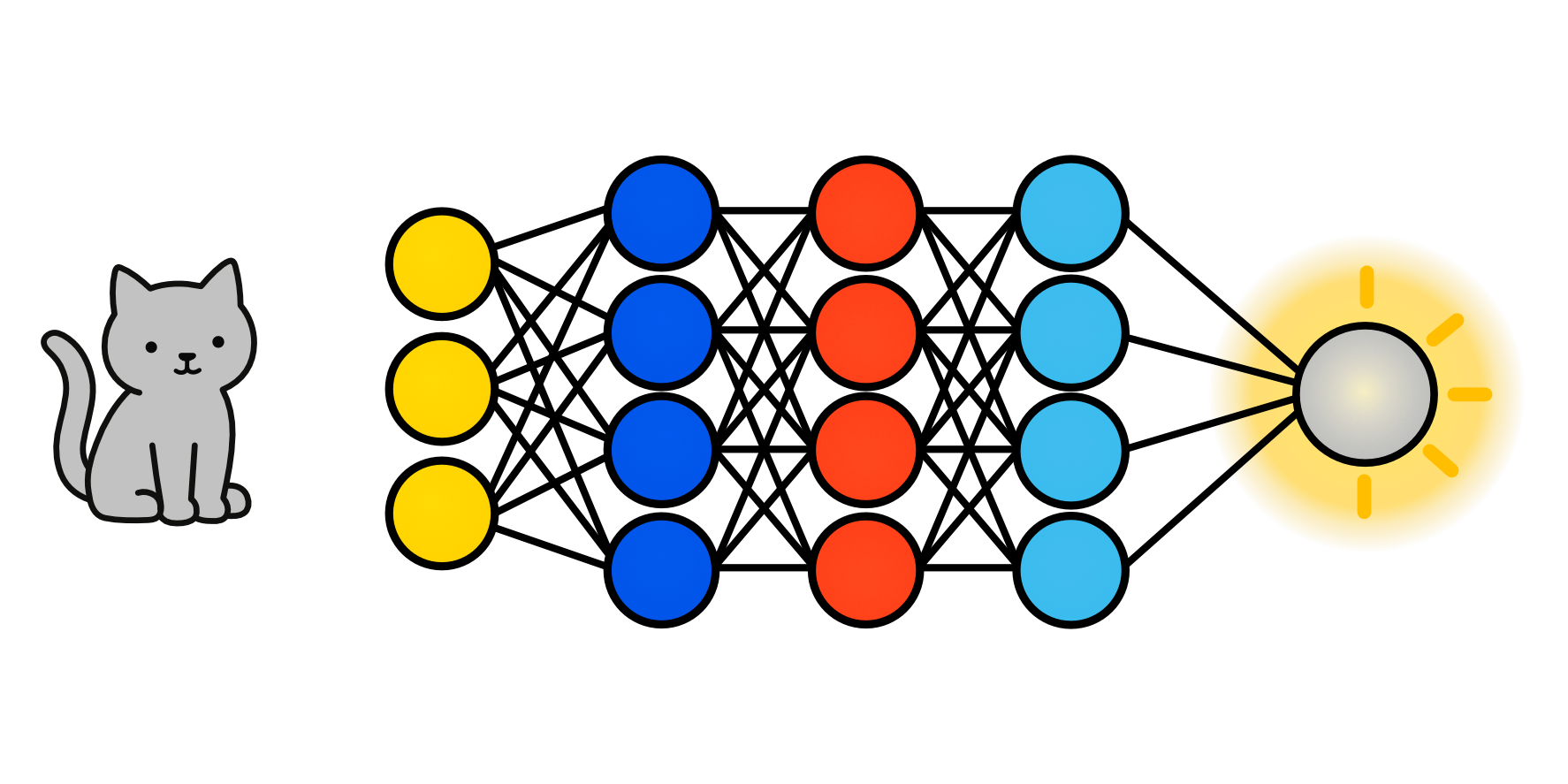
A system reliably responds to cats. What would make one of its internal states mean cat?
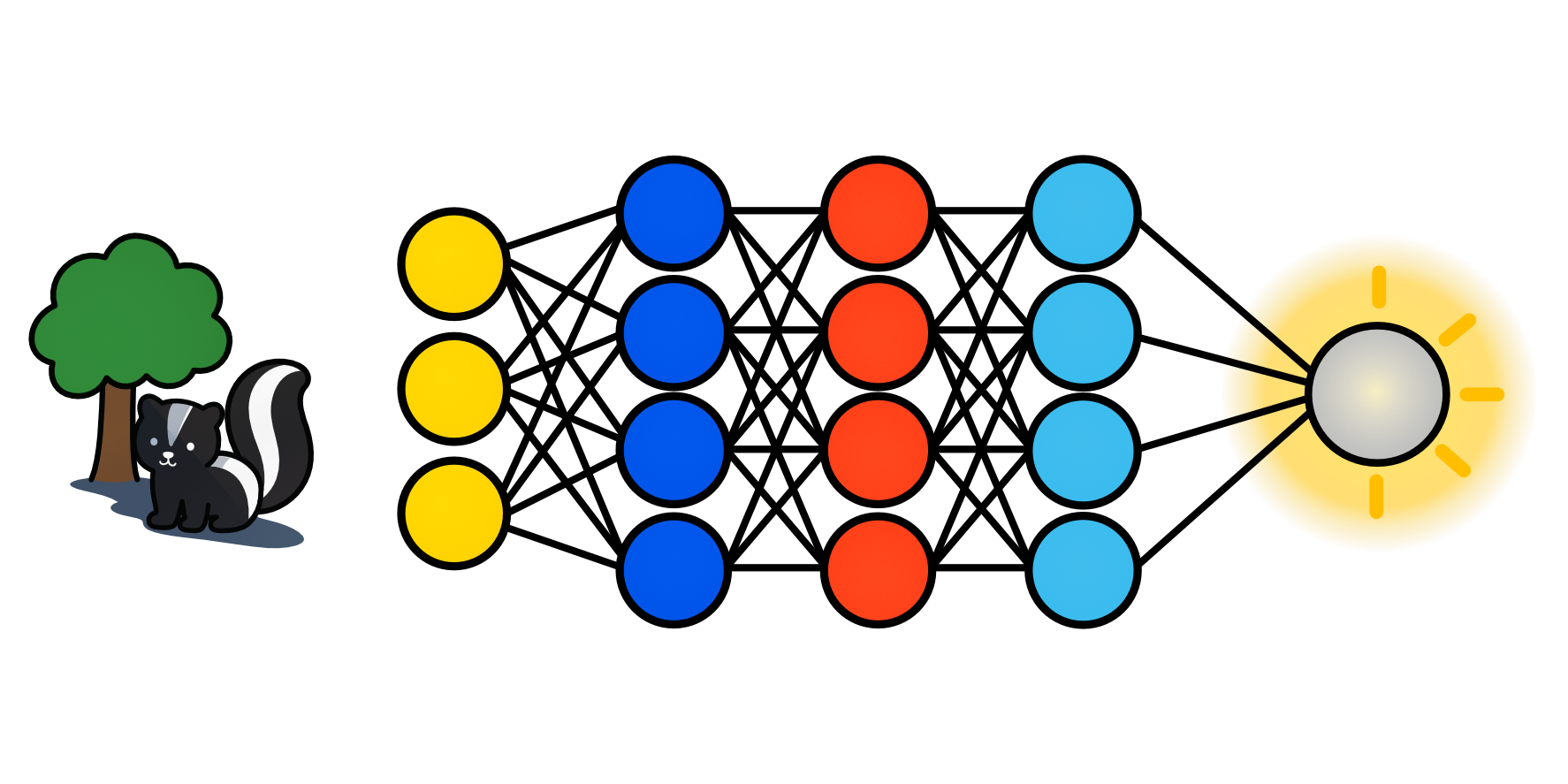
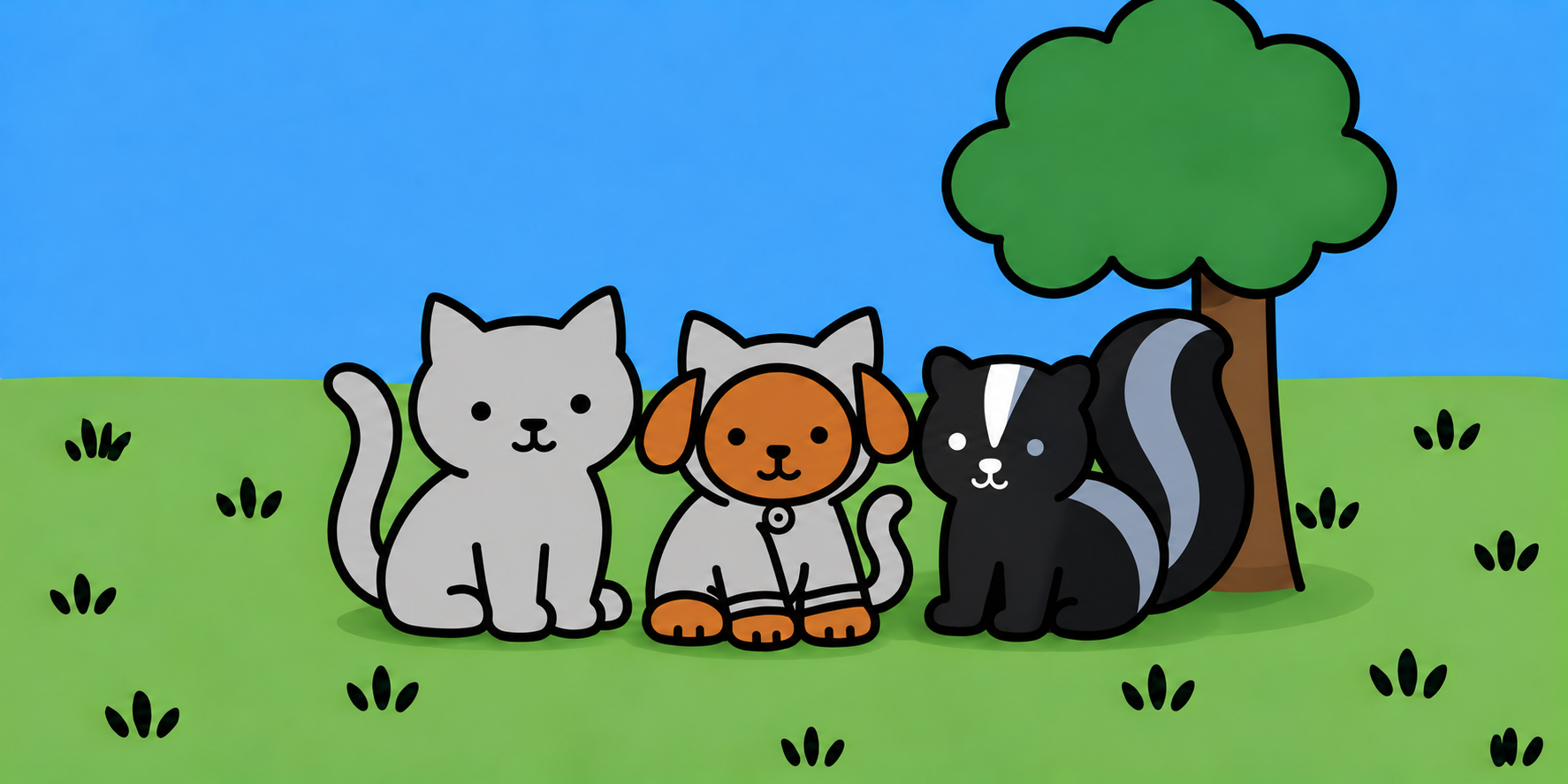
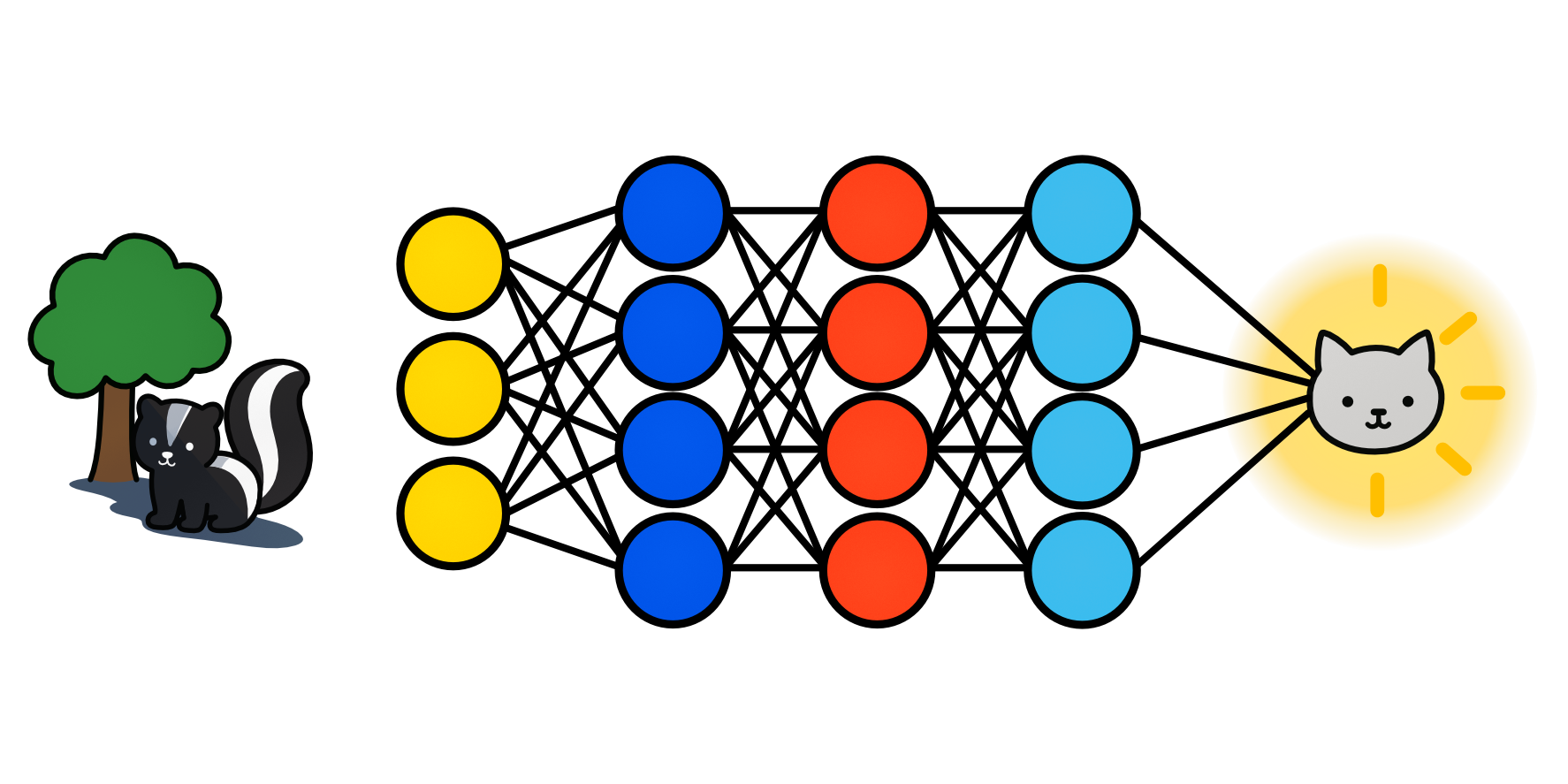
Suppose this state usually occurs when a cat is present. Sometimes, in poor light, a skunk causes the same state to occur. Is that a mistake? Or does the state represent a broader category?
These observations alone do not tell us which interpretation is right.
Informational semantics explores the possibility that a representation’s meaning can be understood in terms of the representation’s information-carrying relations to the world. The difficulty is to say which relations determine the representation’s content—and why other relations reflect misrepresentation, accident, or background association.
This issue arises whenever we ask whether a system represents something—and what it represents. It concerns not only what the system responds to but also what we claim when we say that one of its internal states has semantic content.
The Lab is especially interested in what we can learn by studying the relation between meaning and information, even before we know whether meaning can ultimately be reduced to information.
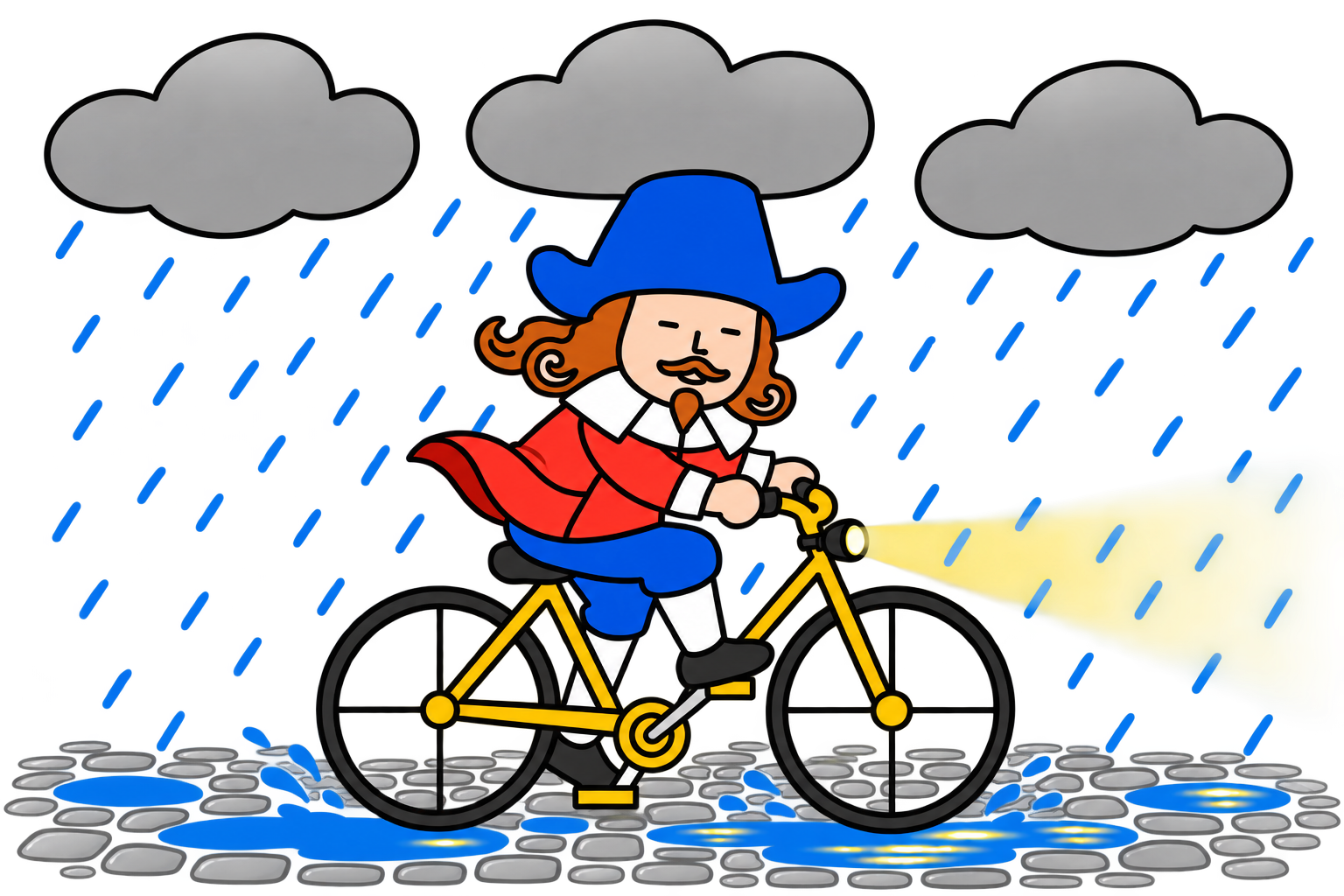
The Oude Rijn is not just an old waterway. It is bicycle lights along winter water, wet cobblestones, lamplit leaded windows, university libraries after dark, and the Dutch practice of uitwaaien: walking or riding out into wind and weather until thought loosens and the mind clears. For the Lab, it evokes a way of seeing and thinking that lies just outside the Anglo-American philosophical mainstream.
What do we mean by “meaning”?
On this site, we use “meaning” as an intuitive working term for semantic content. Understanding when two concepts have the same content—and when they do not—is part of the research program.
How are concepts labeled here?
Throughout this site, uppercase labels such as “CAT,” “RABBIT,” and “CAUSE” name concepts. In a claim such as “CAT means cat,” the italicized lowercase expression indicates the semantic content of that concept. In statements about content, we use italicized lowercase expressions to indicate semantic content rather than to mention the corresponding English words.
“CAT” is only a convenient label. The representation itself need not take the form of a wordlike symbol. It may, for example, be an activation pattern or a feature vector in a human or artificial cognitive system.
For readers concerned with the type-token distinction: In this site’s terminology, a concept is a representational type. We also refer to these concepts as “representations.” An occurrence of a concept is a token: a particular instance of that concept in a cognitive system. Thus “CAT” names a concept, while an occurrence of CAT is a token of that concept.
Accordingly, when we use “activation pattern” here without qualification, we mean a type; a particular instance of that pattern is a token. Likewise, “internal state” here refers to a type; a particular instance of that state is a token. We preserve the distinction throughout but make it explicit only where needed.
The examples that follow are schematic. They are meant to make the Lab’s questions concrete and to motivate distinctions worth investigating—not to settle in advance any questions about concept identity, semantic change, or what distinguishes one content from another.